
A lot of solo lawyers and accountants in Poland still run on referrals and a single static page listing an address and a phone number — built years ago, never touched since. That works until someone with an actual legal or tax problem googles at midnight and picks whichever firm’s site looks like it was built this decade. Here’s what fixing that costs.
In Poland in 2026, a law firm or accounting office website realistically costs 2,500–5,000 PLN for a simple credibility site, 6,000–10,500 PLN for a standard site with service pages, consultation booking, and a resource section, and 11,000–20,000+ PLN for a premium multi-partner platform with a client portal for document exchange. The price gap is mostly about how much of the actual client relationship — booking, documents, ongoing communication — happens through the site itself.

Why This Niche Sells on Credibility Above Everything Else
Nobody hires a lawyer or an accountant on impulse. The decision involves real financial or legal risk, and the site’s entire job is to remove doubt before the first phone call ever happens.
- Specificity beats generality. “We handle all your legal needs” convinces no one. A page clearly stating “we specialize in commercial lease disputes” gets chosen by someone with exactly that problem, even over a bigger, more generic firm.
- Credentials need to be visible, not buried. Bar association membership, years of practice, and specific case types handled all belong prominently on the page — this is one industry where a client actively wants to verify qualifications before reaching out.
- A consultation booking flow removes the biggest friction point. Calling a law office cold feels intimidating to a lot of potential clients; being able to book a first consultation online lowers that barrier significantly.
Price Ranges, by Type of Site
| Site Type | Typical Price (PLN) | What It’s For |
|---|---|---|
| Basic credibility site | 2,500 – 5,000 | Solo practitioner, one or two practice areas, contact form only |
| Standard service-focused site | 6,000 – 10,500 | Small firm, multiple practice areas, consultation booking, resource articles |
| Premium client-portal platform | 11,000 – 20,000+ | Multi-partner firm, secure document exchange, case status updates, multiple offices |
These are Poland-market ranges for a professionally built, fast, mobile-friendly site — a slow-loading site actively undermines the credibility a law or accounting site is supposed to build.
What Actually Drives the Price Up
1. Practice Area / Service Depth
A generalist solo lawyer needs a handful of clear service pages. A mid-sized firm covering corporate law, real estate, and family law needs each area to have its own dedicated page with its own content — not one page mentioning all three, which ranks poorly for any of them individually.
2. Consultation Booking Integration
A simple contact form is cheap. A booking flow that lets a potential client pick a consultation slot, specify the general nature of their issue, and get an automatic confirmation takes real development time, but converts noticeably better than “call during business hours.”
3. A Client Portal for Document Exchange
Larger firms and accounting offices increasingly want a secure area where clients can upload documents (tax records, contracts) and check case or filing status without a phone call. This is the single biggest cost driver at the premium tier — it’s effectively small custom software layered onto the site.
4. Multi-Partner or Multi-Office Structure
Each partner or associate typically needs their own bio page with credentials and specialization. Each office location needs its own address, hours, and local SEO page. A firm with three partners across two cities is a meaningfully bigger content structure than “one lawyer, one page.”
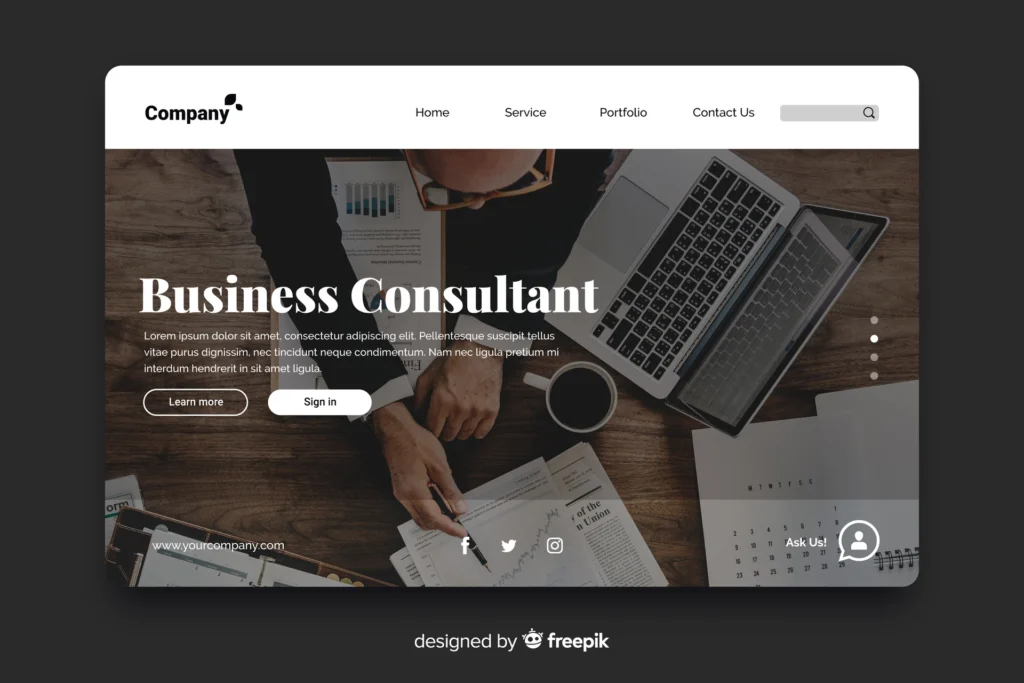
What’s Included at Each Price Point
| Included | Basic | Standard | Premium |
|---|---|---|---|
| Mobile-responsive design | ✔ | ✔ | ✔ |
| Practice area / service pages | Combined | Individual pages | Individual pages, multi-office |
| Consultation booking | — | ✔ | ✔ |
| Attorney/accountant bio pages | Basic | ✔ | ✔ |
| Client document portal | — | — | ✔ |
| Local SEO setup (Google Business, schema) | Basic | ✔ | ✔ (multi-location) |
Common Mistakes That Waste the Budget
- Writing service pages in legal or accounting jargon. A potential client searching “co zrobić gdy pracodawca nie płaci wynagrodzenia” needs plain language that matches how they’re actually thinking about the problem, not a page written for other lawyers.
- Burying reviews or case results. Testimonials and outcomes (anonymized where required) are some of the strongest trust signals available in this industry — hiding them on a secondary page wastes their persuasive value.
- No content plan for SEO. A handful of well-written articles answering common questions (“jak rozliczyć fakturę korygującą”) consistently outperform a static site with no content updates, because they match exactly what potential clients are typing into Google before they ever think to search for a firm by name.
- Treating the site as done at launch. Legal and tax regulations change; a site with outdated information (old tax thresholds, outdated legal references) quietly damages the credibility it was built to establish.
Don’t Forget the Ongoing Costs
- Hosting and domain: roughly 50–150 PLN/month for reliable managed WordPress hosting
- Maintenance: updates, backups, and security monitoring, typically 200–450 PLN/month, higher if a client portal is involved
- Content updates: budget for periodic review of any page mentioning specific tax rates, legal thresholds, or regulations, since these change and outdated numbers on a professional services site are a credibility risk, not just an SEO one
A firm that invests in a strong launch but never revisits the content is choosing to let outdated information slowly erode the exact trust the site exists to build.
The Bottom Line
For a Polish law firm or accounting office in 2026, the realistic starting point is a standard service-focused site, in the 6,000–10,500 PLN range — that’s where clear practice area pages, consultation booking, and credibility signals meet a budget that fits a growing small or mid-sized practice. Going cheaper usually means a generic one-pager that fails to differentiate from every other local firm; the premium tier only makes sense once client volume justifies a document portal and the administrative time it saves.
The number that matters isn’t “what does the website cost” — it’s “what’s one new client relationship worth over the years they’ll likely return for future matters.” In this industry, that number is usually high enough to make the investment an easy decision once it’s framed correctly.

Builds and hosts WordPress sites for small businesses. Writes about the practical side of running a website — cost, speed, and what's actually worth paying for.