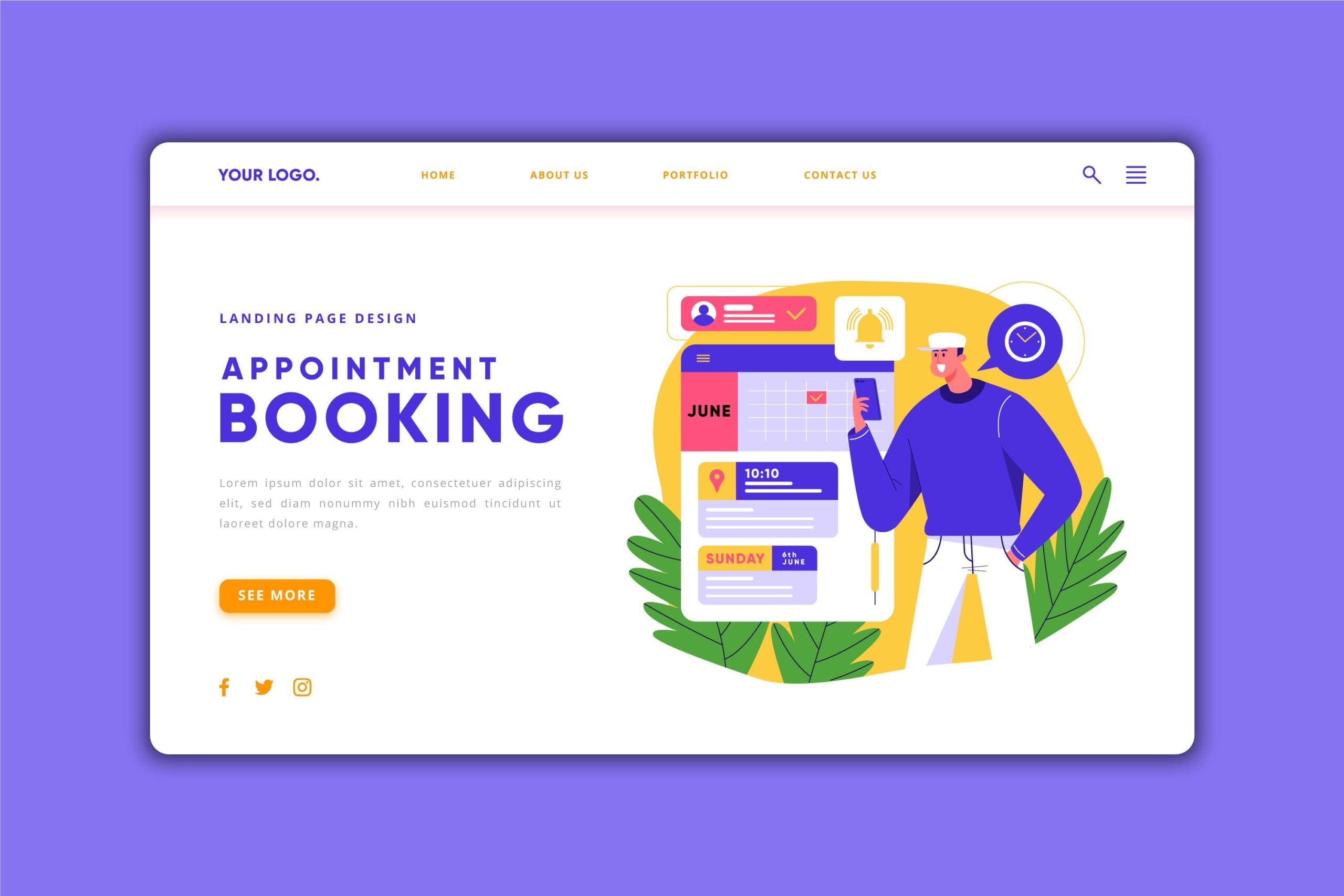
Every “how much does a website cost” article eventually lands on the same feature: online booking. It’s the single biggest jump in price between a basic site and a standard one, across every industry we’ve covered — dental clinics, salons, football academies, construction quote requests. This is the plugin landscape behind that feature, and which option actually fits which kind of business.
For most service businesses, Amelia or Bookly cover 90% of needs — staff calendars, service selection, and automated reminders — for a reasonable one-time or annual license fee. WooCommerce Bookings makes sense only if you’re already running WooCommerce for other reasons. Simply Schedule Appointments is the lightest, cheapest option for a solo practitioner who just needs a working calendar. The expensive mistake is picking based on price alone — the real cost is in setup time and how well it matches your actual booking logic.
What “Booking” Actually Needs to Handle

Before comparing plugins, it’s worth being specific about what a booking system needs to do, because this is where generic recommendations go wrong. A single dentist booking cleanings is a completely different problem than a football academy managing five age groups across two locations.
- Staff/resource-specific availability — can each doctor, stylist, or coach have their own calendar, or does the plugin only support one shared schedule?
- Service duration and buffer time — a haircut and a color treatment don’t take the same time, and back-to-back bookings without a buffer create real scheduling chaos.
- Group vs. individual bookings — a football training session has a capacity limit; a haircut doesn’t. Not every plugin handles capacity-based bookings well.
- Payment collection — do you need a deposit at booking time, full payment upfront, or just a confirmed slot with payment handled in person?
- Reminder automation — SMS and email reminders measurably reduce no-shows, but not every plugin includes SMS without a separate paid add-on.
Plugin Comparison
| Plugin | Best For | Starting Price | Staff Calendars | Payments Built In |
|---|---|---|---|---|
| Amelia | Clinics, salons, multi-staff service businesses | ~$59/year | ✔ | ✔ (Stripe, PayPal) |
| Bookly | Similar to Amelia, slightly more customizable forms | ~$89 one-time (Pro) | ✔ | ✔ (add-on) |
| Simply Schedule Appointments | Solo practitioners, simple single-calendar needs | Free / ~$149/year Pro | Limited | Add-on only |
| WooCommerce Bookings | Stores already running WooCommerce | ~$249/year | ✔ | ✔ (native WooCommerce) |
| The Events Calendar + Tickets | Group sessions, classes, tournaments (capacity-based) | Free / paid add-ons | Partial | ✔ (via Tickets) |
Prices shift often enough that it’s worth checking current numbers before committing — the relative positioning here (which plugin fits which business shape) is more durable than the exact dollar figures.
Matching the Plugin to the Business
Dental and Medical Clinics
Amelia is usually the strongest fit — it handles multiple doctors with independent calendars, supports appointment categories (cleaning vs. consultation vs. procedure) with different durations, and its reminder system is genuinely good at reducing no-shows, which matters more in healthcare than almost anywhere else.
Beauty Salons and Spas
Amelia and Bookly are both strong here. The deciding factor is usually the level of customization needed in the booking form itself — Bookly tends to offer slightly more flexible custom fields (hair length, preferred stylist notes) out of the box.
Football Academies and Group Classes
This is where most booking plugins actually struggle, because they’re built around one-to-one appointments, not group sessions with a capacity limit. The Events Calendar combined with its Tickets add-on handles capacity-based sign-ups properly — treating a training session like an event with a maximum number of spots, rather than forcing it into an appointment-slot model it wasn’t designed for.
Solo Practitioners and Small Service Providers
If it’s genuinely one person with one calendar — a single hairdresser, a solo contractor doing consultations, a personal trainer — Simply Schedule Appointments does the job without paying for multi-staff features that will sit unused.
Setup Mistakes That Cause the Most Problems Later
- Not setting buffer time between appointments. This is the single most common complaint from clients using booking plugins — back-to-back bookings sound efficient until a slightly-long appointment cascades delays through the entire day.
- Leaving default reminder timing untouched. A reminder sent 24 hours out works differently than one sent 2 hours out — for services with high no-show risk (like fitness classes), a two-stage reminder (24 hours and 2 hours) performs meaningfully better than either alone.
- Not testing the mobile booking flow before launch. Most bookings now happen on a phone; a plugin that looks fine on desktop but has a cramped, hard-to-tap calendar on mobile quietly loses bookings every single day.
- Skipping the “what happens on cancellation” setup. Whether a cancelled slot reopens automatically, and whether the client gets a refund or reschedule option, needs to be configured deliberately — the default settings rarely match what a business actually wants.
Do You Need a Plugin at All?
For very simple cases — a single service, no staff differentiation, low booking volume — a well-configured embedded calendar (Calendly or similar, embedded directly on the site) can be enough, and skips plugin licensing and WordPress-specific setup entirely. It’s worth considering before committing to a full plugin, especially for a business just testing whether online booking gets used at all. For everything past that — multiple staff, service categories, or anything approaching the complexity described in our pricing breakdowns by industry, a proper plugin (or custom booking system, at the premium end) earns its cost quickly in reduced admin time and fewer missed appointments.

The Bottom Line
There’s no single “best” WordPress booking plugin — there’s the one that matches your actual booking shape: one calendar or many, individual appointments or group capacity, simple confirmation or full payment handling. Get that match right, and a $60–90/year plugin does most of what a custom-built system would cost thousands to replicate. Get it wrong, and even the most expensive plugin will feel like fighting the tool instead of using it.

Builds and hosts WordPress sites for small businesses. Writes about the practical side of running a website — cost, speed, and what's actually worth paying for.